The Daymark's availability page lists seven residences right now, from a two-bedroom penthouse at $1,540,000 to a three-bedroom-plus-den terrace home at $3,795,000. At the same time, the company building Edge on Hudson has asked the Village of Sleepy Hollow to let it build the next approved condominium building, Block K, as a 175-unit rental instead. Village records show no decision yet. On October 6, 2026, the Board of Trustees' work session includes a "Financial Analysis for Edge-on-Hudson" presentation.
If you are thinking about buying at The Daymark, this vote affects three things a listing sheet will not show you. It decides how many new condos your home would compete with at resale. It affects how soon the empty lots around the building get built. It also decides whether Edge on Hudson stays mostly owner-occupied. In each case, the request mainly changes the timeline.
The permit math behind the request
Edge on Hudson runs under a special permit the village adopted on June 7, 2011. The permit caps the share of rental units, and the developer has nearly reached that cap.
| Edge on Hudson residential units | Count | Share of 1,177 total |
|---|---|---|
| Rental units allowed under the 2011 permit | 470 | 40% |
| For-sale units allowed under the 2011 permit | 707 | 60% |
| Rental units already built | 434 | |
| Rental units left under the current cap | 36 | |
| Total rentals if Block K is built as rental | 609 | about 51.7% |
Since only 36 rental units remain under the cap, a 175-unit rental Block K needs a permit amendment. The building itself is already approved. At the May 12 hearing, developer Peter Chavkin told trustees the only change requested is from for-sale to rental. The concept design calls for five stories at about 74.5 feet, a wrapped parking garage, a central courtyard and a pool. About 15 percent of the units would be one-bedrooms, about 20 percent three-bedrooms, and the rest two-bedrooms. That is a larger average unit than the existing Northlight rental building, which has 246 units.
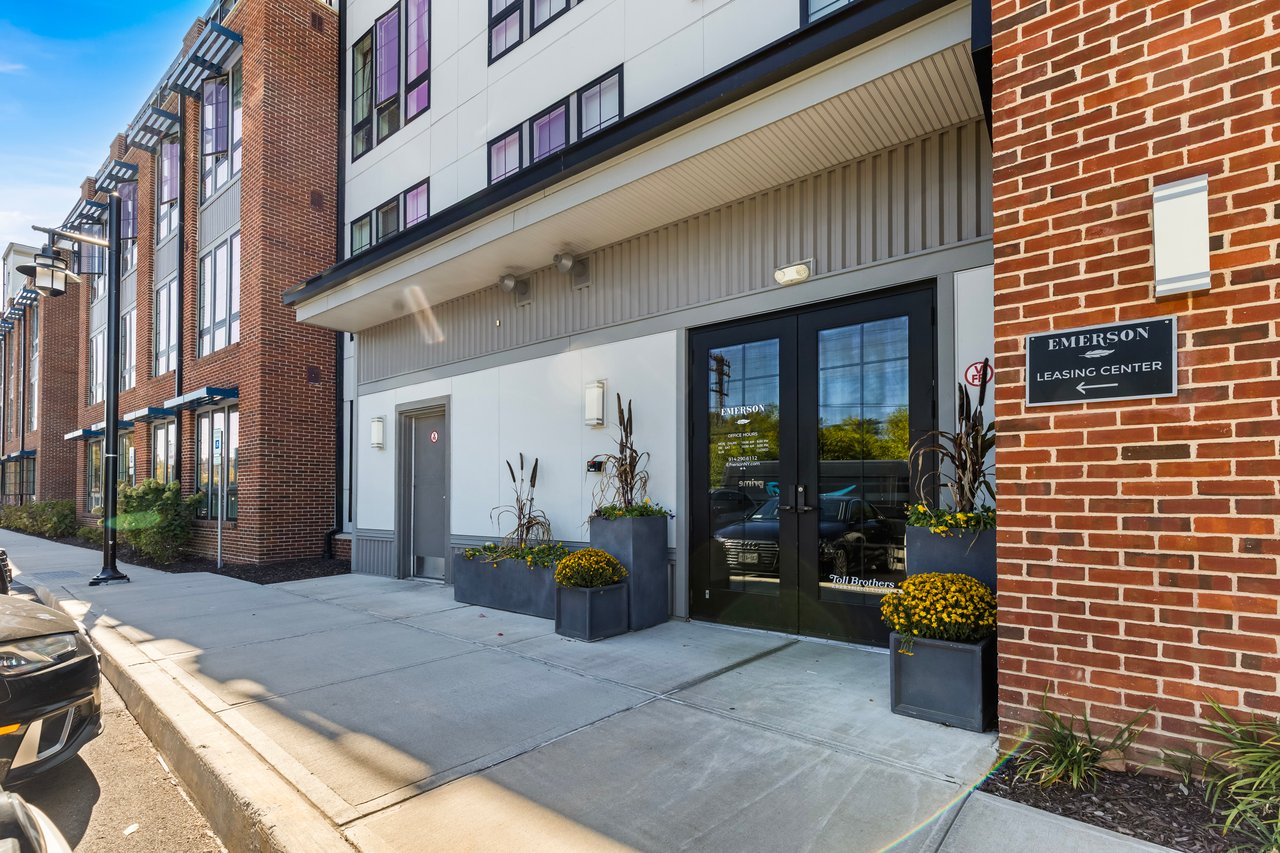
The existing rental buildings named on the developer's master plan are Emerson, by Toll Brothers, and Northlight, by Hines. If Block K is approved as a rental, the community moves from a permit built around ownership to a majority-rental mix.
Why the same building gets built sooner as a rental
The applicant's case rests on speed. At the June 9 hearing, Peter Farrow of AKRF presented the fiscal analysis. He said the village's cost of serving the building is the same either way, but a rental can be built about seven years sooner than a condominium "due to differences in financing, absorption rates, and market dynamics."
This is the core of the request. A condo building earns back its cost one closing at a time, so it depends on how quickly buyers commit. A rental building leases up and is valued as a whole. AKRF valued the earlier tax revenue at about $6.4 million in present value to the village over 20 years, using a 3 percent discount rate. Farrow also explained the tax class. Rental buildings are assessed in the non-homestead class, with a lower assessed value but a much higher tax rate, so he said net revenue comes out about the same. He told the board that revenue to Tarrytown schools would be identical either way.
The applicant also listed two community benefits. The final phase of waterfront improvements would move up by three years, and the village would receive a $3 million payment for a public benefit. At the June hearing, Chavkin said the $3 million would be paid regardless of the timeline.
Where the numbers are disputed
The seven-year head start drives the whole calculation, and trustees questioned it. Trustee Husselbee asked what protections the village would have if the change were approved and the building still did not go up quickly. He also said tax certiorari challenges, which are common on large apartment buildings, should be built into the projections. Chavkin offered a sunset provision. If no building permit is pulled within two years of approval, the right to build rentals would revert to condominium.
Edge on Hudson residents spoke on both sides. Angela Sony presented a counter-analysis. She said homestead tax rates have risen about 19 percent over five years while non-homestead rates have fallen, and that at current rates the present-value benefit drops from $6.4 million to about $3.78 million. Over 50 years instead of 20, she estimated condominium ownership would generate about $25 million more in tax revenue than rentals. Brian Palmer, a resident speaking in favor, pointed to faster tax benefits and a quicker build-out of community amenities. Beth Walchof said she had come around to supporting the change because she wants construction finished, but cautioned the board against relying on current tax-rate assumptions.
To check the math, the village took bids for an independent review. A July 4 proposal from CMS Realty Advisors would extend the model to 30 years, measure the shift from homestead to non-homestead taxes, and "independently evaluate the applicant's assertion that the for-sale condominium market is slowing." It quoted a fixed fee of $17,500. The same packet included a $10,000 proposal from Storrs Associates. The July 14 agenda listed approval of a consultant without naming one. The public hearing was continued again on August 4 and September 8.
What county condo data says about "slowing"
Whether the condo market is slowing is the question the independent review was asked to answer. Countywide figures point both ways. Here is Westchester's condo market in August 2026, compared with August 2025, from the Hudson Gateway Association of Realtors:
- Median sale price: $615,000, up 20.8 percent from $509,000
- Closed sales: 129, up 26.5 percent from 102
- Days on market until sale: 45, up 40.6 percent from 32
- Inventory: 256 condos for sale, down 3.4 percent from 265
- Share of original list price received: 100.0 percent, down from 100.5 percent
Prices and closings rose, so buyers are still active. Days on market rose too, which means each sale is taking longer. A developer with about 240 condo units still to sell at The Daymark, Building M and Building Q, by its own count at the June hearing, would feel those longer sale times on every unit. The developer's case is about how fast it can sell new luxury units. The countywide median is $615,000, while The Daymark's current asking prices start at $1.54 million.
The Daymark itself has sold steadily. An August 6 report said 95 of its 100 residences had sold, with five homes left. The building's own availability page currently shows seven residences. The difference may come from changes in inventory or from how each source counts availability. Either way, the building is close to sold out.
How the vote changes a Daymark buyer's position
For someone buying at The Daymark, the vote matters most for what gets built next door and when.
Resale competition. Your eventual buyer may compare your home with new units the developer is still selling. Block M is a six-story, 92-unit mixed-use building. January 2026 minutes record the developer saying it would appear lower than The Daymark at the same elevation. The Planning Board approved M's site-plan resolution 5-0 on June 18, 2026. Village records describe Block Q as years away. If Block K becomes rentals, its 175 units leave the for-sale pipeline altogether. That leaves Building M as the main source of new for-sale condos near The Daymark.
Construction timing. The applicant calls K the next scheduled building in the sequence. The buildings are also connected by parking. M's plan places 45 retail and guest spaces in the future Block K garage. So the timing of Block K also affects when M's restaurant and retail have their full parking.
What opens at street level. Block M's commercial plan names a publicly accessible destination restaurant and a neighborhood-serving salon or spa, with no tenant identified. Additional restaurant seating in the waterfront park would need a separate permit.
The waterfront. On June 18 the Planning Board approved the Phase III waterfront open-space resolution, and village records say that park can move ahead before Block Q. The applicant's offer to speed up the final waterfront phase by three years is tied to the Block K approval.
The owner/renter mix. About 51.7 percent of units would be rentals. This is a fact about the building stock, not about the people who live there. At the June hearing, Chavkin said converting K would not devalue the remaining condo product, because that would work against the developer's own interest in selling it. That is the applicant's position. The village's independent review is the pending check on the market side of the argument.
What is still undecided as of October 4
- Whether the Board of Trustees approves, conditions or denies the Block K amendment. No vote appears in the posted records.
- Which consultant the village hired and what the review concluded about the condo market. The October 6 presentation is the next scheduled point where that could become public.
- Whether any approval includes the two-year sunset Chavkin offered, which would send the building back to condominium if no permit is pulled.
- Construction dates for Block M and Block Q. None appear in the records reviewed.
If you are deciding between a Daymark residence now and a future unit in Building M, these unresolved items affect what you would be buying into. The Aloia Stroub Team follows Edge on Hudson's village proceedings closely, and we can show you how The Daymark's current asking prices compare with Westchester condo sales. If you already own at The Daymark and want to know where your home stands before Block K is decided, request a free home valuation.
This article is general information, not legal, tax or financial advice. Consult a qualified professional about your situation.