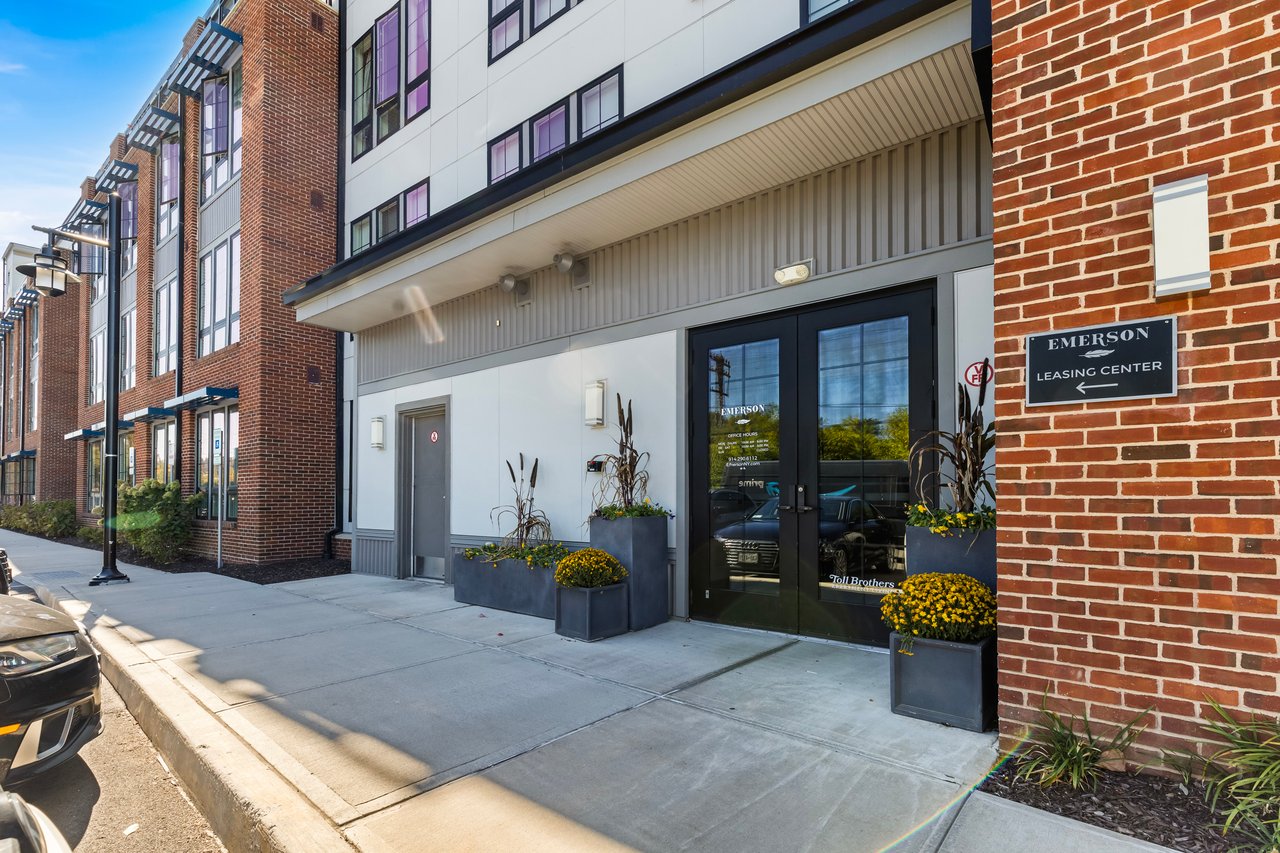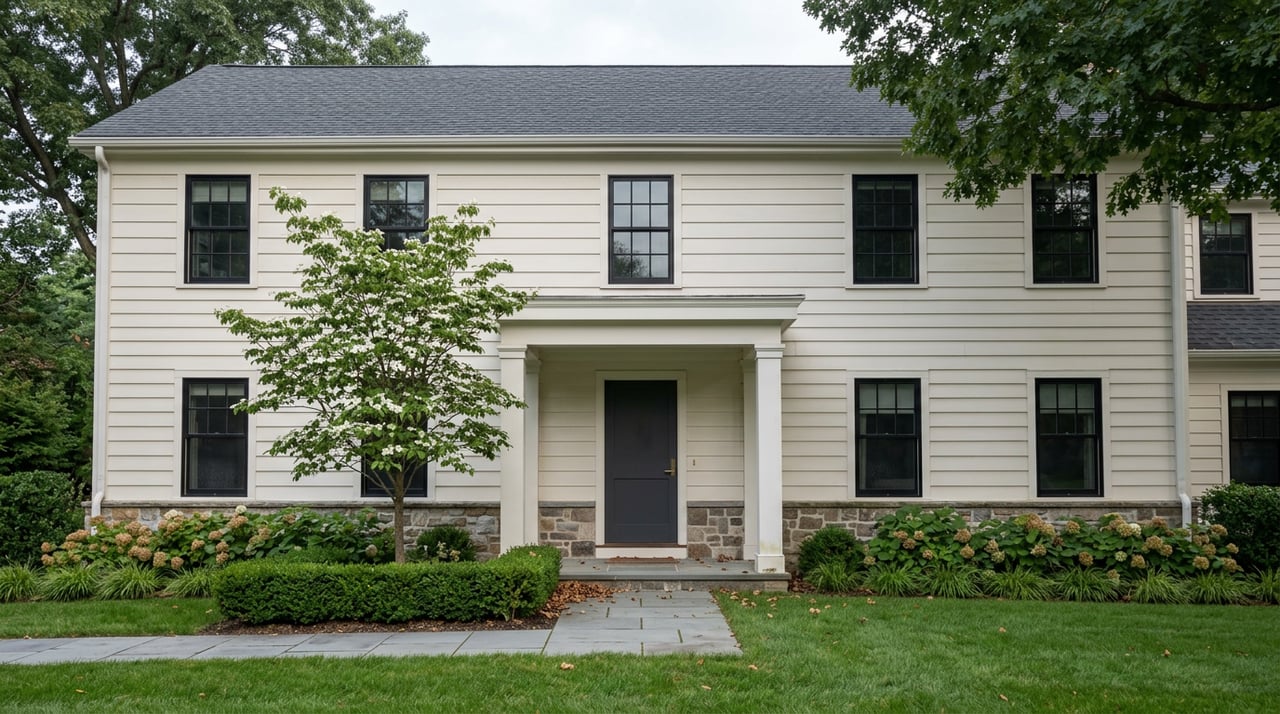
How can two homes listed at roughly the same price in the same zip code carry property tax bills that differ by thousands of dollars a year? It sounds like an assessor's mistake. It isn't. It's New York State law working exactly as written, and it means the sticker price on a Philipse Manor colonial and a new condo at Edge on Hudson can look identical while the real monthly cost of owning them does not.
This matters most for buyers who have already done the obvious homework. They've seen the median prices. They've toured a few open houses. What they usually haven't seen is why the tax line on a pre-1935 center hall colonial and the tax line on a brand new river-view condo, both priced near $1.2 million, get calculated using two entirely different formulas under state law. That difference is worth understanding before you fall in love with either kind of house.
Same Price, Same Village, Different Formula
Philipse Manor is one of the oldest established neighborhoods in Sleepy Hollow, a river-facing enclave of roughly 375 single-family homes, most built before 1935, dominated by classic center hall colonials and Tudors. Local brokerages describe the upper end of Philipse Manor and its neighbor Sleepy Hollow Manor as running from $1.25 million to $2.8 million, with homes carrying unobstructed Hudson River views often landing at the higher end of that band.
A short walk or drive away, Edge on Hudson has spent the last several years turning a former GM assembly plant site into a mixed use waterfront community of condos, townhomes, and rental apartments. When the first batch of Toll Brothers townhomes there went up for sale, units ran from roughly $1.2 million to $1.5 million for homes between 2,342 and 2,517 square feet, putting them squarely in the same price band as a river-adjacent Philipse Manor colonial.
Two buyers, similar budgets, similar zip code. On paper, the comparison looks straightforward: old house with character versus new construction with amenities. It isn't that simple, because the way New York State requires each property to be assessed for tax purposes is not the same, and that difference didn't happen by accident.
The Assessment Rule Nobody Explains at the Open House
Single-family homes in New York, including the colonials and Tudors that make up most of Philipse Manor, are assessed the way most buyers assume all property is assessed: based on what comparable homes have actually sold for.
Condominiums are assessed differently, and the difference is written directly into state law. Under Real Property Law Section 339-y and Real Property Tax Law Section 581, a condominium building has to be valued as a single entity using an income or cost approach, similar to how a rental apartment building is valued, rather than by adding up what individual units have sold for. Once that whole-building number is set, it gets divided among the units.
New York State's own Office of Real Property Tax Services has acknowledged what this produces in practice. In one formal legal opinion, the office noted that this method "can lead to a condominium unit's assessed value being lower than its market selling price," and pointed to data showing that in some municipalities, condo units end up carrying roughly half the tax burden of a conventionally owned home priced the same way. The law behind this was enacted in 1983 and, per legal analysis of the statute, has not been amended since, despite periodic efforts to change it.
This is not a New York City quirk. The statute is state law, and it applies just as much to a condo tower in Sleepy Hollow as it does to one in Manhattan.
What Edge on Hudson's Own Sales History Confirms
You don't have to take the statute's word for it. When Edge on Hudson's condominiums first went on the market, coverage from The Hudson Independent laid out exactly how the assessment split would work locally: the condos would be taxed by the Village of Sleepy Hollow as if they were single family homes, but at the lower rate applied to condos and co-ops by the Town of Mount Pleasant and the Public Schools of the Tarrytowns. The townhomes, by contrast, were built and sold as conventional single-family properties and taxed accordingly, without the condo assessment cap.
That single detail is the whole thesis in miniature. Within the same development, two ownership structures at similar price points can land on two different tax tracks, purely because of how each is titled under state law, not because of anything about the unit itself.
Here's how the pieces typically stack up when you're comparing an older Philipse Manor home to newer condo product nearby:
| Cost factor | Philipse Manor colonial | Edge on Hudson condo |
|---|---|---|
| Assessment method | Comparable sales, like most site-built homes | Whole-building income/cost approach under RPL 339-y |
| Typical tax outcome relative to price | Tracks market value more closely | Can run below market value under the statutory cap |
| Monthly association dues | None | Roughly $350 to $900 or more, unit-specific, based on comparable Hudson River condo product nearby |
| Ownership structure | Fee simple, you own the land | Condominium, shared common elements |
| Age of major systems | Often original or older, verify condition | New construction, generally under initial warranties |
Neither column is automatically the better deal. It depends on what a buyer is optimizing for.
The Line Items an Old Colonial Doesn't Have, and the Ones It Does
A Philipse Manor buyer isn't paying a monthly association fee, because there isn't one. There's no shared roof, no clubhouse, no reserve fund a board manages on your behalf. That also means there's no one buffering you from the cost of your own roof, driveway, or furnace when something built before 1935 finally needs attention. Older systems in a home this age deserve a serious inspection, not a cosmetic walk-through, and any tax savings the condo option might offer should be weighed against what an older single-family home may need in the next five to ten years.
A condo buyer at Edge on Hudson is trading that independence for a predictable monthly line item that typically covers exterior maintenance, snow removal, trash, and shared amenities. Exact dues at Edge on Hudson vary by building and unit, but recent listings at The River House, a comparable Hudson River condo community just south in Tarrytown, put that kind of fee in the range of $350 to $900 or more per month. It's a useful benchmark for what centralized building costs tend to look like along this stretch of the river, even though every building sets its own budget. The tradeoff is real: lower relative tax exposure under the condo assessment rules, offset by a dues bill that a colonial owner simply doesn't have.
If you're weighing ownership types within Edge on Hudson itself, it's also worth understanding how the development's master association interacts with each building's own sub-association, since that structure can change what's covered and what isn't from one building to the next.
What to Actually Ask Before You Compare Two Listings
The sticker price will never tell you which property costs less to hold. Before you compare two listings side by side, ask for:
- The actual current tax bill, not an estimate pulled from a listing sheet. Assessment method changes the math enough that estimates based on price alone can mislead you in either direction.
- The condo or co-op's most recent HOA budget, reserve study, and board minutes, so you know whether dues are stable or a special assessment is coming.
- Whether the property in question is titled as a condominium, a fee simple townhouse, or a condominium townhome, since the legal structure determines which assessment rules apply.
- For an older single-family home, documentation on the age and condition of the roof, heating system, and electrical panel, along with a homeowner's insurance quote before you're under contract.
None of this shows up in a median price. All of it shows up in your first year of ownership.
A Few Questions Worth Settling Early
Does this mean condos are always cheaper to own than a comparable house? Not necessarily. The assessment method can lower a condo's relative tax burden, but HOA dues, insurance requirements, and building-specific costs still add up. The two numbers you're weighing are tax exposure versus monthly dues, not a single winner.
Will a condo's tax advantage change over time? The underlying statute has been in place since 1983 and hasn't been amended, but individual assessments, tax rates, and HOA budgets can all shift year to year. Always verify current figures rather than relying on what a neighbor paid.
Is this specific to Sleepy Hollow, or does it apply anywhere in Westchester? The assessment law is statewide, but the local tax rates that get applied to it, set by the Village of Sleepy Hollow, the Town of Mount Pleasant, and the Public Schools of the Tarrytowns, are local. The mechanism is the same everywhere in New York. The dollar amount depends on where you are.
If you're trying to work out what a specific Philipse Manor property or Edge on Hudson condo would actually cost you to carry month to month, that's exactly the kind of local math Karen Stroub & Elvira Aloia walk buyers through before an offer goes in, not after. Request a Free Home Valuation to start the conversation with real numbers for your situation, not a median.